A 10 dollar coin can refer to more than one U.S. gold issue. Collectors usually mean the classic eagle, but the same denomination also appears on the modern quarter-ounce American Gold Eagle.
These coins do not belong to one market. Liberty Head, Indian Head, and the modern Eagle serve different collector goals. That is why they should be compared separately.
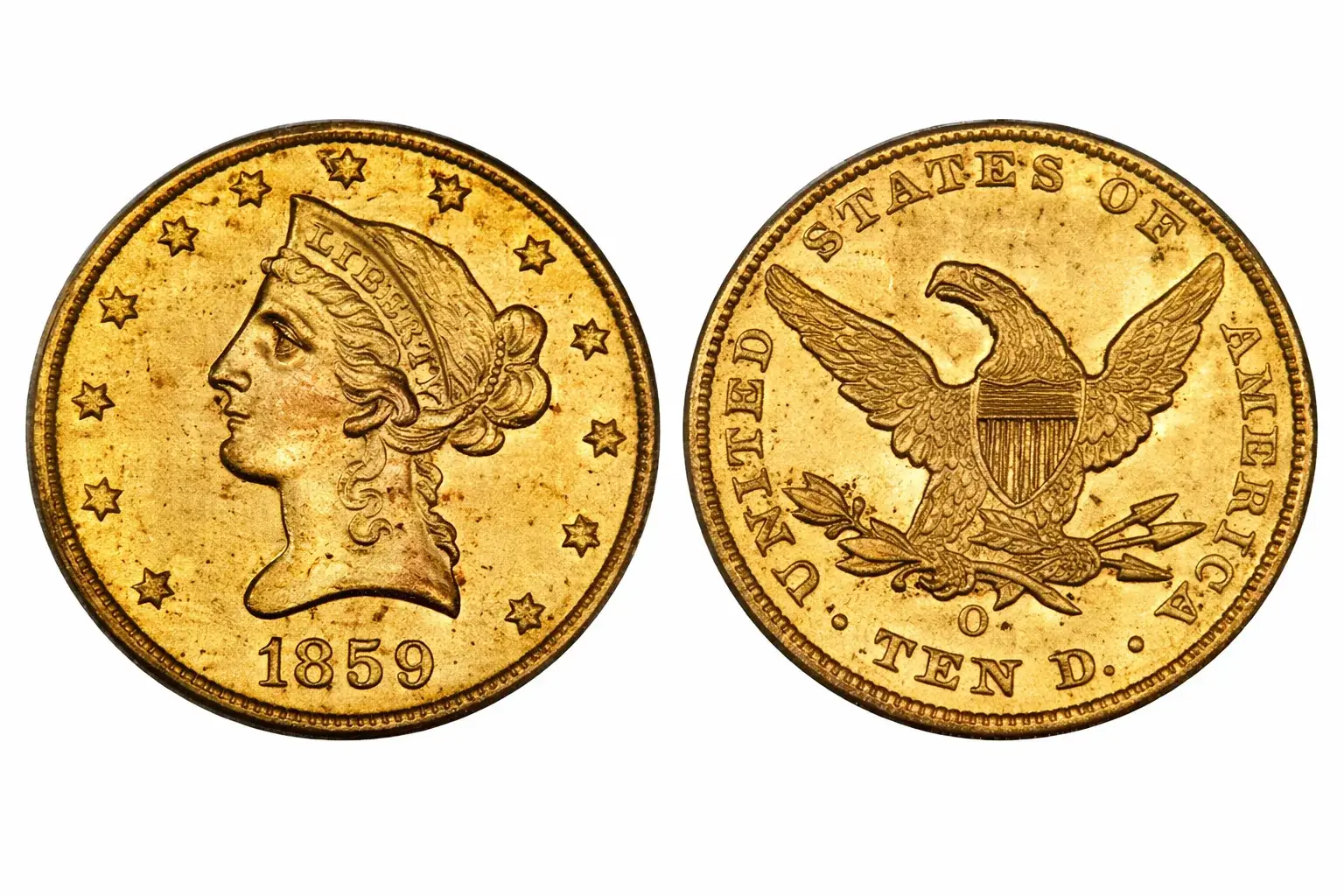
Meaning of the $10 Gold Coin
The eagle is a long-standing U.S. gold denomination. It entered federal coinage in 1795, together with the half eagle. That gives the $10 coin a clear place in early American money.
Still, the denomination alone does not tell the whole story. Not every $10 gold coin belongs to the same market. Some are classic pre-1933 collector coins. Others are modern gold issues with a different purpose and a different buying logic.
The Three Main Groups
- Liberty Head $10 eagle
- Indian Head $10 eagle
- Modern $10 American Gold Eagle
Liberty Head $10 Eagle
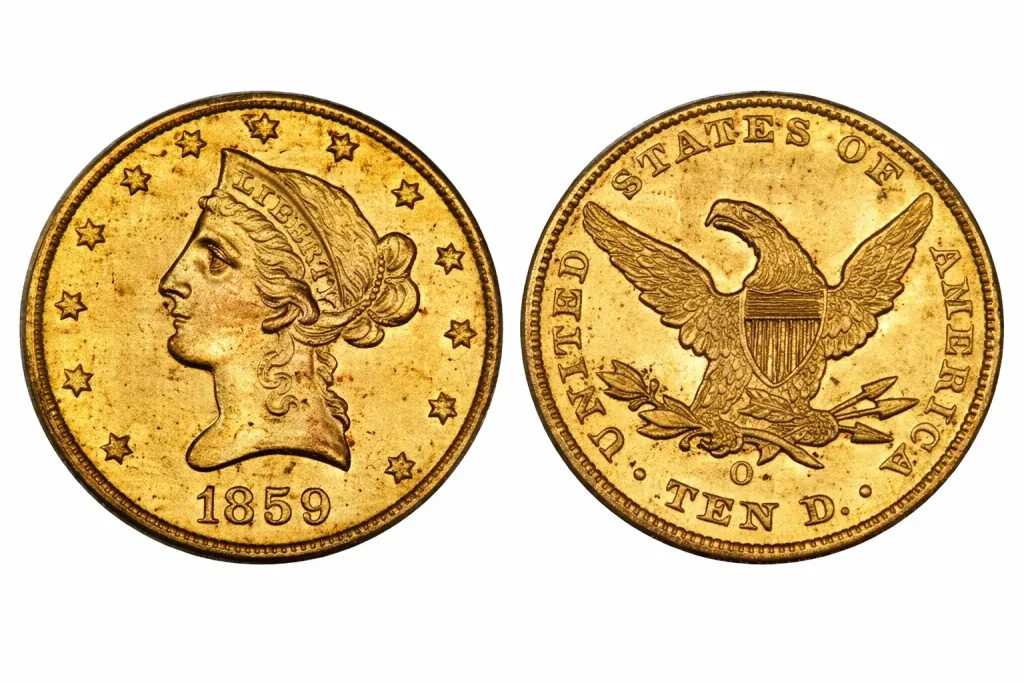
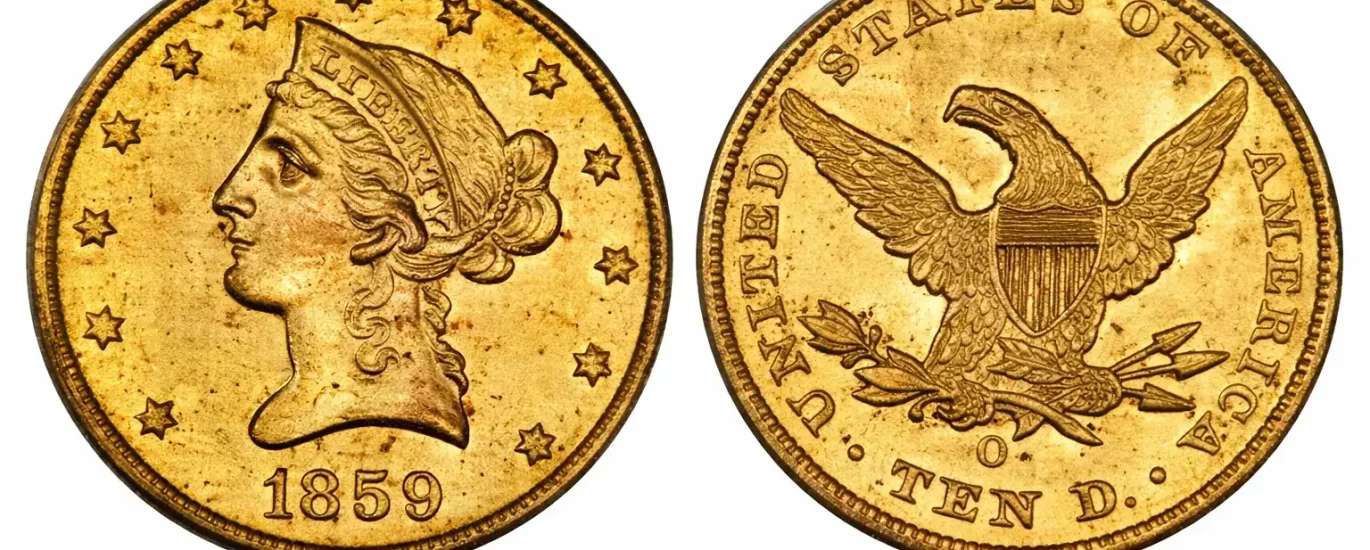
The Liberty Head series ran from 1838 to 1907. PCGS describes it as the Coronet or Liberty Head style used when $10 coinage resumed in 1838, with the design continuing through 1907. This is the classic long-run eagle. It gives collectors a broad date range, multiple mints, and a very traditional U.S. gold look.
The type follows the standard classic eagle format. The 1907 Liberty Eagle is 26.80 mm, 16.70 grams, and 90% gold with 10% copper. That is the familiar pre-1933 gold standard many collectors expect when they hear “$10 eagle.” The design is by Christian Gobrecht, and the edge is reeded.
What Collectors Usually Like About Liberty Head
- Long series span
- Broad date-and-mint coverage
- Classic U.S. gold style
- Easier type-coin framing
- Strong historical identity
For many buyers, Liberty Head is the entry point. It feels familiar. It behaves like a classic U.S. gold type. The market can become very deep once dates and mints come into play, but the design itself stays easy to recognize. That makes it practical for both type collectors and more advanced date-and-mint buyers.
Indian Head $10 Eagle
The Indian Head $10 eagle is a different coin in look and in market tone. The series ran from 1907 to 1933. This is the Saint-Gaudens design period. The coin is shorter in run than the Liberty Head and more specialized in feel. Collectors often see it as the more distinctive artistic type.
The physical standard remains close to the earlier eagle. The 1907 Indian eagle characteristics are as follows: 26.80 mm, 16.70 grams, and 90% gold with 10% copper. The major visible change is the design and edge treatment. The edge carries raised stars rather than reeds. That alone makes the coin feel different in hand.
What Collectors Usually Notice First
- Stronger design shift
- Shorter series feel
- Raised-star edge
- More selective market by type and date
- Stronger focus on originality and surfaces
The Indian Head eagle often pulls in buyers who want more than “old U.S. gold.” It has a more deliberate visual identity. It also has important subtypes and better dates inside the series. That does not mean every Indian Head eagle is rare. It does mean the series usually feels tighter and more specialized than Liberty Head.
Modern $10 American Gold Eagle
The modern $10 American Gold Eagle belongs to another category. It is not a former circulating coin. It is a modern precious-metal issue. The U.S. Mint lists the quarter-ounce American Gold Eagle with a $10 denomination, 0.250 troy ounce gold weight, and a composition of 91.67% gold, 3% silver, and balance copper. The bullion program table gives the same face value and quarter-ounce position for the modern series.
This type is easier to understand if it is not forced into the same box as the classic Eagles. The modern piece starts with metal weight, issue format, and current Mint products. The older pieces start with history, survival, and classic collector structure. That difference changes how people buy them.
Modern $10 Gold Eagle Quick View
| Feature | Modern $10 American Gold Eagle |
| Era | 1986 to present |
| Face Value | $10 |
| Gold Weight | 0.250 troy ounce |
| Composition | 91.67% gold, 3% silver, balance copper |
| Basic Market Role | modern bullion and collector issue |
Liberty Head Vs Indian Head Vs Modern Eagle
A flat value guide hides the real differences. A comparison works better.
| Factor | Liberty Head $10 | Indian Head $10 | Modern $10 Gold Eagle |
| Main Era | 1838–1907 | 1907–1933 | 1986–present |
| Basic Purpose | former circulating gold coin | former circulating gold coin | modern bullion/collector issue |
| Metal Standard | 90% gold, 10% copper | 90% gold, 10% copper | 91.67% gold, 3% silver, balance copper |
| Weight | 16.70 g | 16.70 g | modern quarter-ounce format |
| Collector Feel | classic, broad, traditional | design-driven, tighter, more specialized | modern, metal-first, product-based |
This table explains why the market should not be treated as one category. Liberty Head is usually the broad historical lane. Indian Head is the design-and-selectivity lane. The modern Eagle is the fractional gold lane. The face value is the same. The buying logic is not.
What Each Type Offers to a Collector
Collectors do not all want the same thing. This denomination serves different goals well.
Liberty Head Works Best For
- Classic U.S. gold history
- Long series collecting
- Date-and-mint study
- Traditional type collecting
Indian Head Works Best For
- Stronger design focus
- Pre-1933 gold with tighter identity
- Subtype interest
- More selective type collecting
Modern Eagle Works Best For
- Simple modern gold entry
- Official Mint bullion/collector issues
- Standardized gold weight
- Less historical complexity at the first step
This is a useful way to compare them. The collector who wants one classic gold type often starts with the Liberty Head. The collector who wants the stronger design statement may lean toward Indian Head. The buyer who wants modern quarter-ounce U.S. gold usually belongs in the modern Eagle lane.
What to Check Before You Compare Prices
Price comparison should never come first. The type comes first.
First Questions to Ask
- Is the coin Liberty Head, Indian Head, or modern Eagle?
- Is it pre-1933 or modern?
- Are you comparing collector history or gold weight?
- Is the piece being judged as a type coin or as a metal product?
This is the point where a coin identifier app can help. The main use is sorting. It helps separate similar-looking $10 categories before deeper checking begins. That is useful for newer collectors and for mixed holdings where one older eagle can be confused with a modern quarter-ounce issue by denomination alone. The app is a first-pass tool, not the final answer.
Metal Matters, but Not in the Same Way
All three groups involve gold. That does not mean they sit on the same value structure.
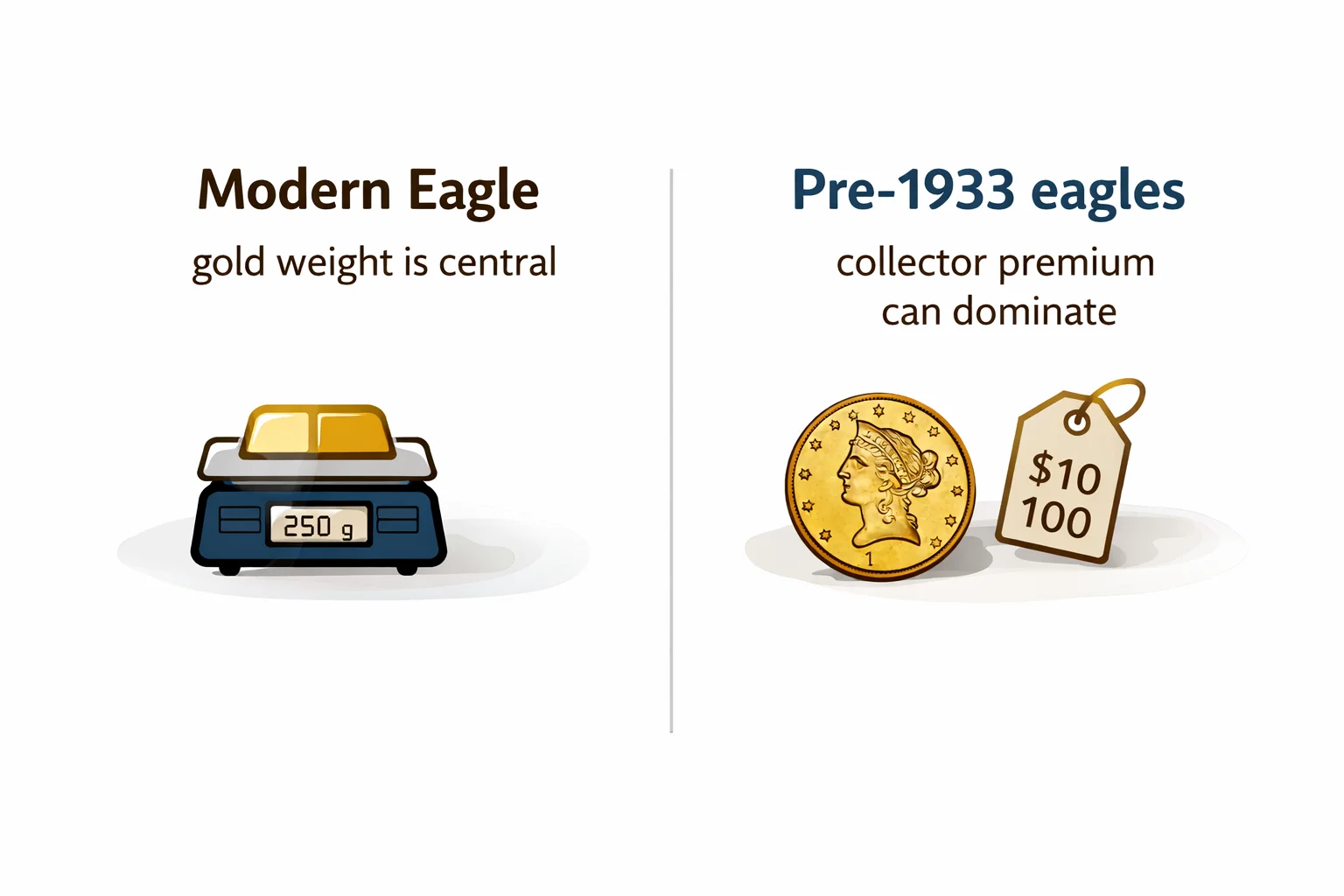
For the modern $10 American Gold Eagle, metal weight is a very direct part of the appeal. The quarter-ounce format is easy to understand. It is built into the product itself. For Liberty Head and Indian Head, gold content still matters, but the collector premium can move the coin far away from simple bullion logic. This is why a pre-1933 eagle should not be read like a modern fractional issue.
The same point helps with buying discipline. A collector who wants history may over-focus on the melt. A gold buyer may over-focus on denomination. Both mistakes create confusion. The better method is simple: type first, purpose second, price last.
Why Comparison Works Better Than a Flat Value Guide
Many readers search for “10-dollar coin” as if it points to one object. It does not. The comparison format works better because it removes the main source of confusion.
| Question | Better First Step |
| What kind of $10 gold coin is this? | Identify the type |
| Is it a classic coin or a modern issue? | Separate pre-1933 from modern |
| Why is one much costlier than another? | Compare the collector role, not the face value |
| Does gold content explain everything? | Check the market purpose first |
This is why a broad comparison article is more useful than a blended value article. It gives the reader a way to sort the category before looking at prices.
Conclusion
The $10 gold denomination is one of the most useful examples of why face value can mislead. Liberty Head, Indian Head, and the modern American Gold Eagle all sit under the same $10 label. They do not belong to the same collector framework. One is classic and broad. One is more specialized and design-driven. One is modern and metal-focused.For a quick first pass, a coin value app can help sort the type before deeper manual review. Coin ID Scanner is one example. Its saved coin cards, collection management tools, and quick type organization are useful when a collector wants to separate Liberty Head, Indian Head, and modern Eagle pieces before making a final decision. That step can make the category easier to read. The final judgment still belongs to the coin in hand.